Insert Headline
OFFICER'S FULL DRESS & DISTINCTIONS


















Double click here to add text.
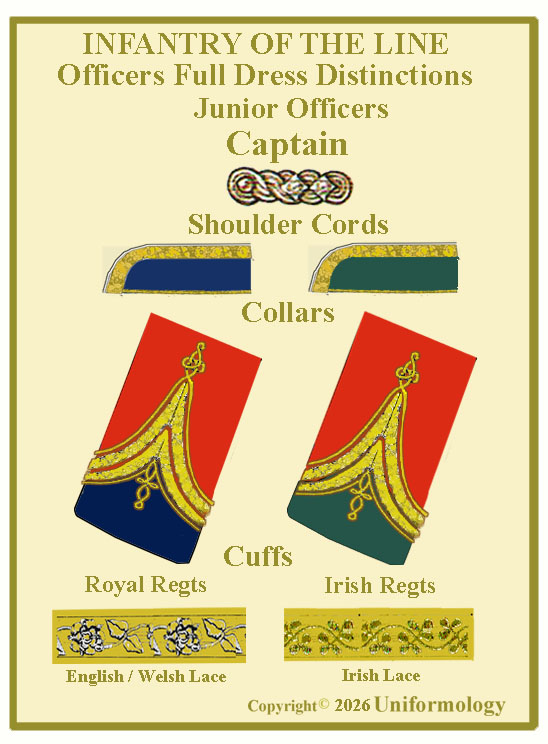
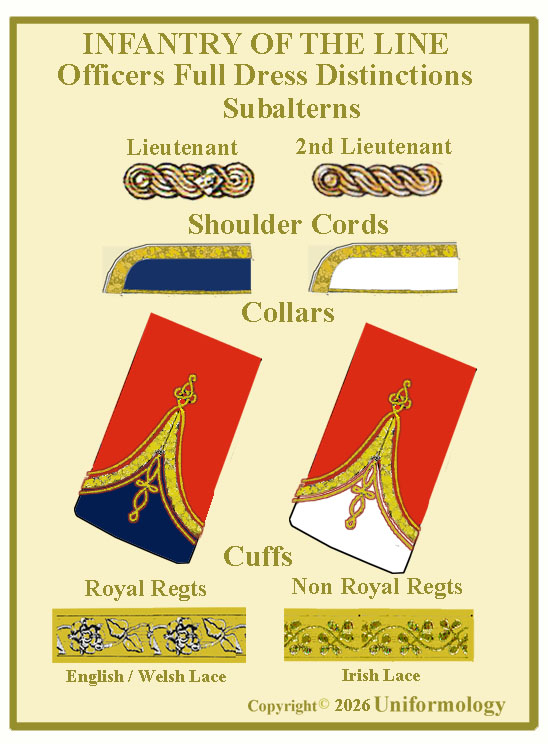
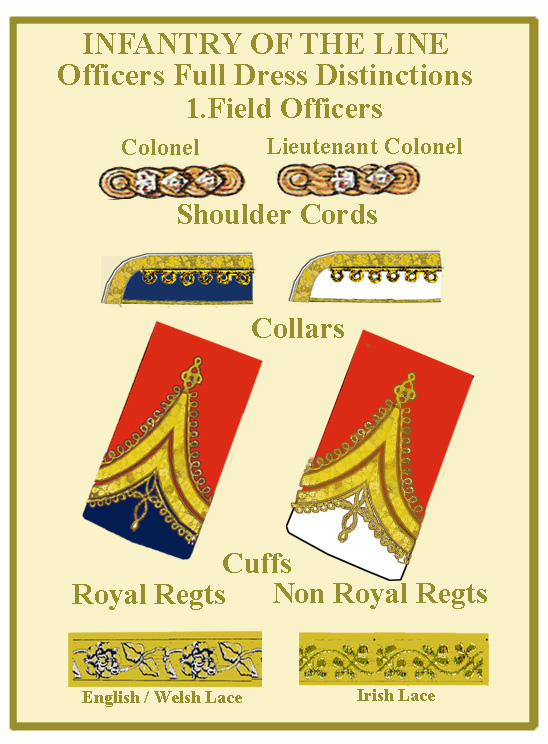
Officer's Full Dress Uniform
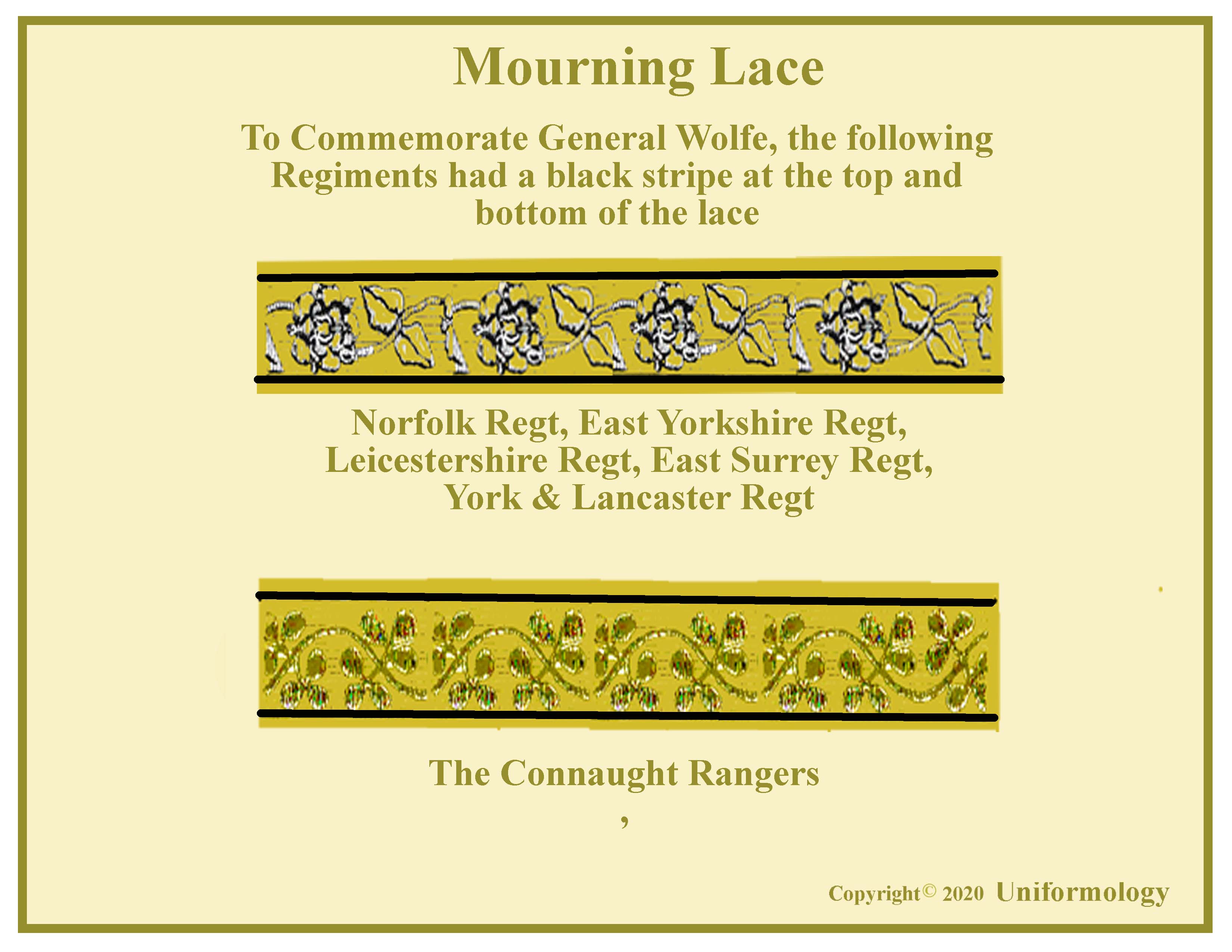
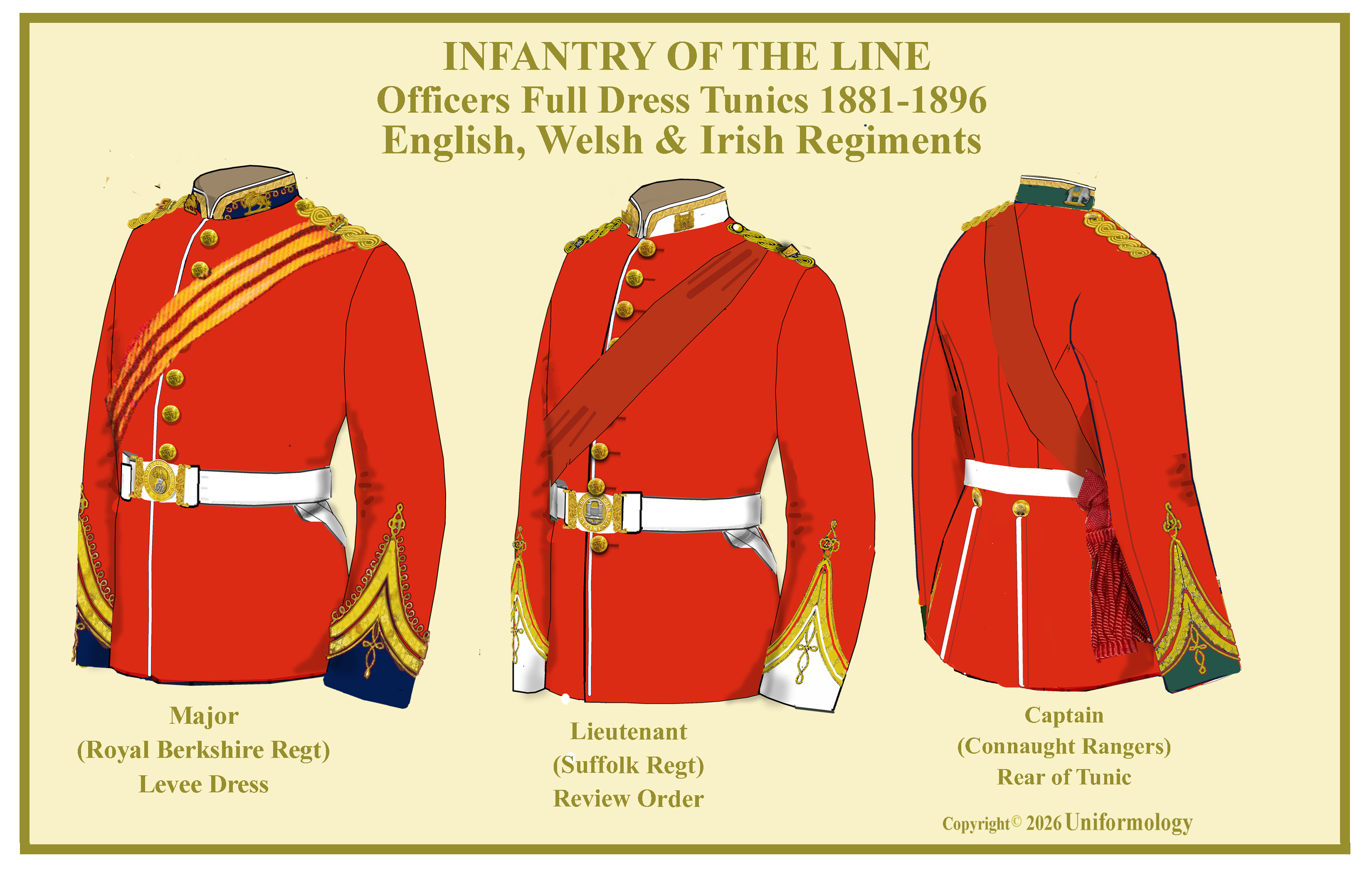
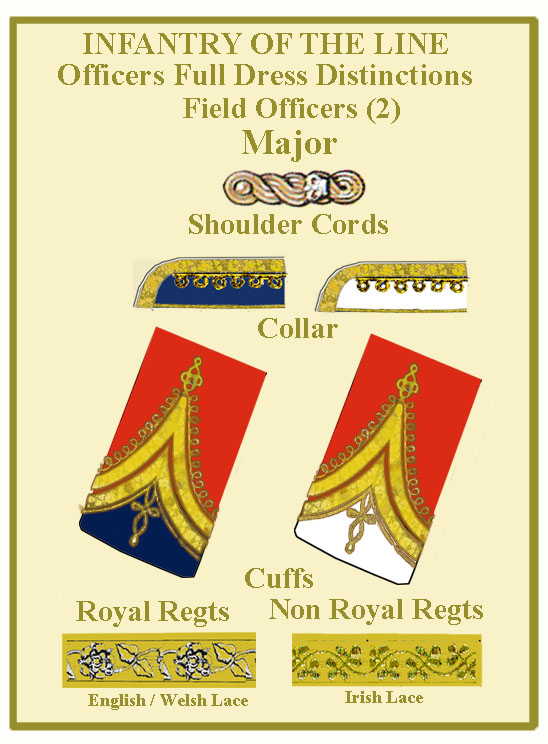
the Tunic worn in 1881 was first introduced in 1868 and with minor changes it was worn until Full Dress was abolished. It was scarlet with collar and cuffs of regimental colour. It was piped around the top of the collar, down the front of the tunic and at the rear of the skirt, from the waist down each side. There were eight regimental buttons down the front and two on the waist at the rear. The pointed cuffs were decorated by gold lace and Russia braid according to rank (see below). The pattern of gold lace was rose in English & Welsh regiments. Shamrock for Irish regiments and thistle for Scottish. In 1878, the badges of rank were moved from the collar and placed on the universal pattern gold twisted shoulder cords. At the same time, officers wore regimental badges on the collar.
In 1881, to the consternation of most regiments, their long lived facing colours (Collar & Cuffs)were to change to white for English and Welsh regiments and yellow for Scottish regiments. Regiments designated "Royal" were to keep their blue facings. Irish non Royal regiments were to wear dark green facings. (Since it was only Non-Royal Irish regiment, the Connaught Rangers were the only Irish regiment to wear the dark green facings).
In 1894, due to some political pressure, a few regiments regained their cherished facings, the first were the Buffs. (East Kent Regiment)
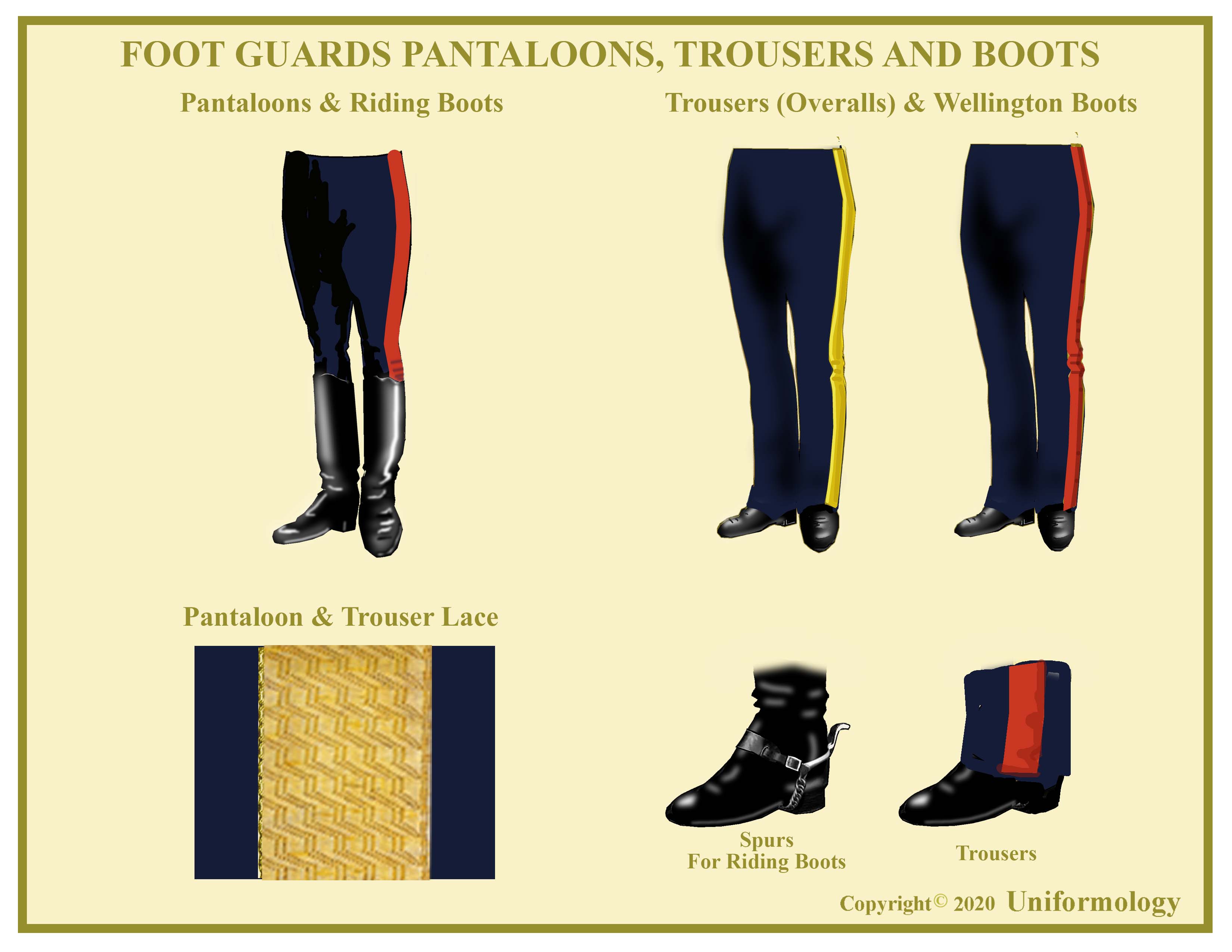
Trousers were dark blue with 1/4 inch scarlet welts.