Insert Headline













Double click here to add text.

*The Royal Scots (Lothian Regiment)
The Queen's (Royal West Surrey Regiment)
The Buffs (East Kent Regiment)
The King's Own (Royal Lancaster Regiment)
The Northumberland Fusiliers
The Royal Warwickshire Regiment
The Royal Fusiliers (City of London Regiment)
The King's (Liverpool Regiment)
The Norfolk Regiment
The Lincolnshire Regiment
The Devonshire Regiment
The Suffolk Regiment
Prince Albert's Light Infantry (Somersetshire Regiment)
The Prince of Wales's Own (West Yorkshire Regiment)
The East Yorkshire Regiment
The Bedfordshire Regiment
The Leicestershire Regiment
The Royal Irish Regiment
The Princess of Wales's Own (Yorkshire Regiment)
The Lancashire Fusiliers
*The Royal Scots Fusiliers
The Cheshire Regiment
The Royal Welsh Fusiliers
The South Wales Borderers
*The King's Own Scottish Borderers
*The Cameronians (Scotch Rifles)
The Royal Inniskilling Fusiliers
The Gloucestershire Regiment
The Worcestershire Regiment
The East Lancashire Regiment
The East Surrey Regiment
The Duke of Cornwall's Light Infantry
The Duke of Wellington's (West Riding Regiment)
The Border Regiment
The Royal Sussex Regiment
The Hampshire Regiment
The South Staffordshire Regiment
The Dorsetshire Regiment
The Prince of Wales's Volunteers (South Lancashire Regiment)
The Welsh Regiment
*The Black Watch (Royal Highlanders)
The Oxfordshire Light Infantry
The Essex Regiment
The Sherwood Foresters (Derbyshire Regiment)
The Loyal North Lancashire Regiment
The Northamptonshire Regiment
Princess Charlotte of Wales's (R. Berkshire Regiment)
The Queen's Own (Royal West Kent Regiment)
The King's Own Light Infantry (South Yorkshire Regiment)
The King's Light Infantry (Shropshire Regiment)
The (Duke of Cambridge's Own) Middlesex Regiment
*The King's Royal Rifle Corps
The (Duke of Edinburgh's) Wiltshire Regiment
The Manchester Regiment
The (Prince of Wales's) North Staffordshire Regiment
The York and Lancaster Regiment
The Durham Light Infantry
The Highland Light Infantry
*Seaforth Highlanders (Ross-shire Buffs)
*The Gordon Highlanders
*The Queen's Own Cameron Highlanders
*The Royal Irish Rifles
Princess Victoria's (Royal Irish Fusiliers)
The Connaught Rangers
*Princess Louise's (Argyll & Sutherland Highlanders)
The Prince of Wales's Leinster Regiment (Royal Canadians)
The Royal MunsterFusiliers
The Royal Dublin Fusiliers
*The Prince Consort's Own (Rifle Brigade)
INFANTRY REGIMENTS OF THE
BRITISH ARMY IN 1881
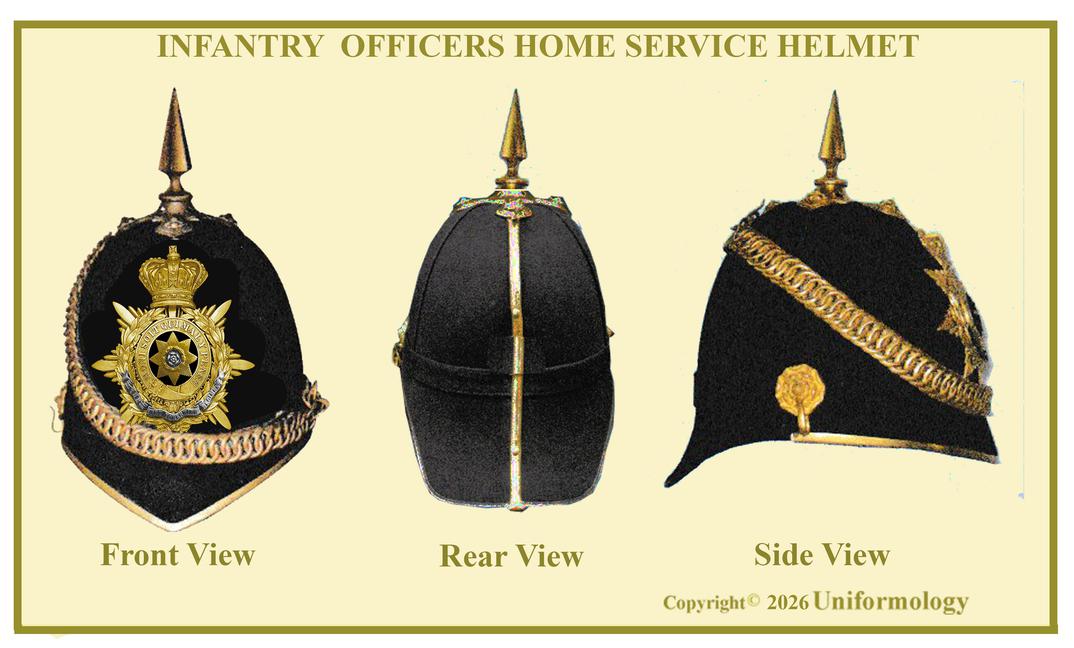
FOR THE PURPOSE OF CLARITY THIS STUDY OF INFANTRY OF THE LINE IS DIVIDED INTO 3 PARTS
1. ENGLISH WELSH & IRISH REGIMENTS
2. SCOTTISH REGIMENTS (Starred above)
3. RIFLE REGIMENTS (Starred above)
The British Home Service Helmet
Officers
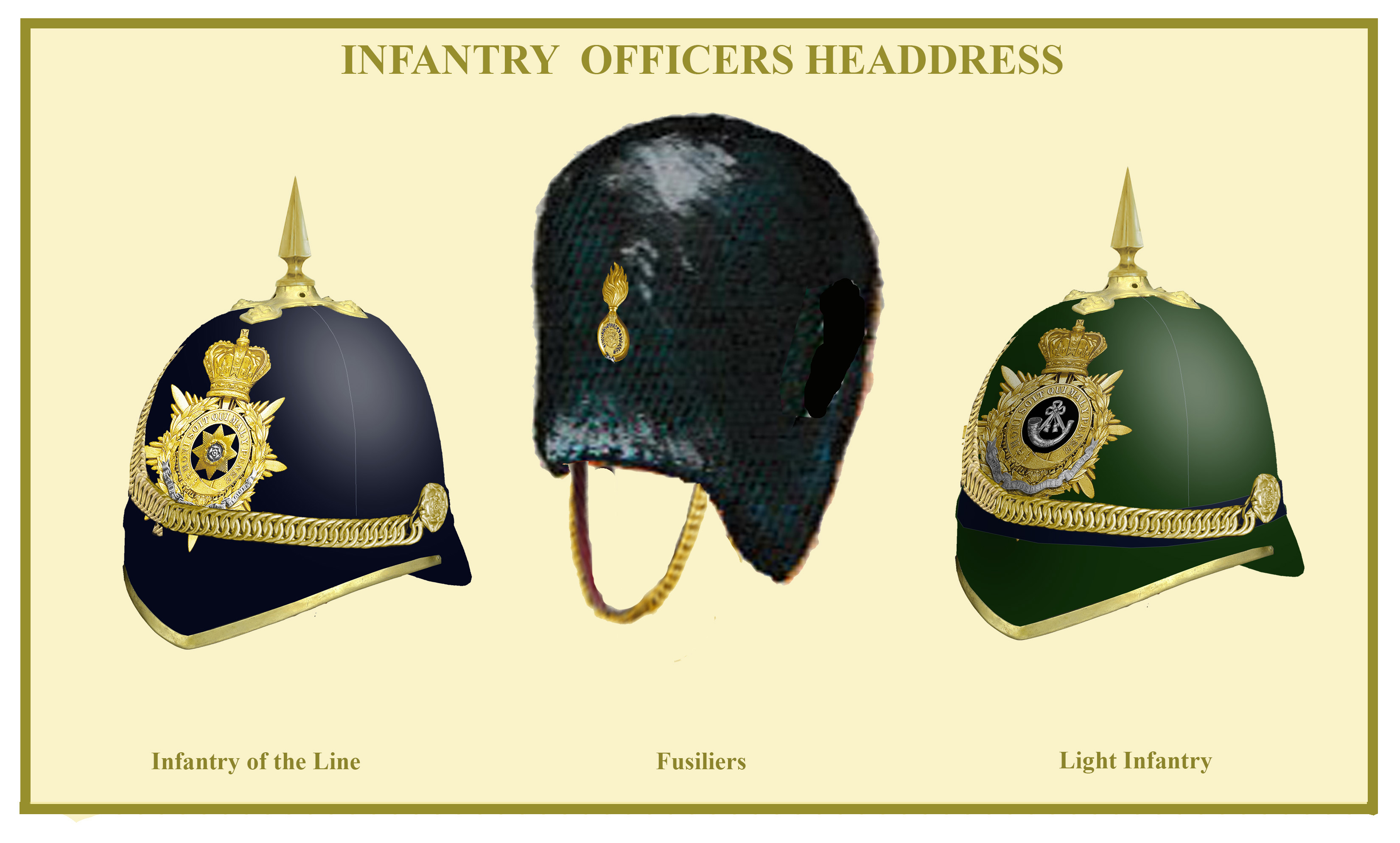
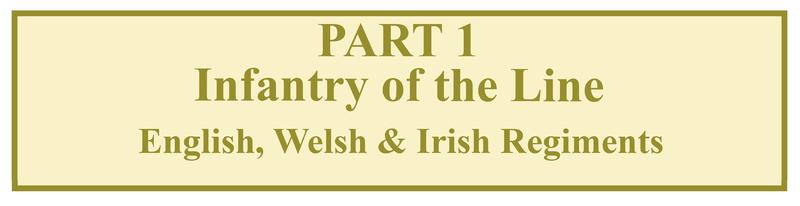
For almost 80 years, the British infantry had worn various patterns of shako, often similar to their European allies and also their adversaries. In 1878, the War office introduced a spiked helmet inspired by that worn by the Prussian 1870 victory over France. It was to be worn by the line infantry and other auxiliary corps, such as the Royal Field Artillery and Royal Engineers. The officer’s helmet was to be made of stiffened cork covered with blue cloth with four seams, two on each side. It had peaks front and back. The front peak was bound with 3/16th gilt metal. The rear peak was bound with black patent leather 1/8th inch wide. The waist of the helmet was bound with a cloth band (the same cloth as the body) 3/8ths inches wide. A gilt convex bar ¼ inch wide was fitted from the top of the crown to the edge of the rear peak. Fastened with two gilt studs.
The gilt Curb Chain (Chin strap) was lined by black velvet and attached on each side with gilt disks embossed with a rose pattern. Attached under the disk was a gilt hook upon which the curb chain was secured.
At the top of the helmet was a gilt crosspiece base with a rose at each corner. Inserted into the crosspiece was a gilt spike 3 1/4 inches high.
The colour of the helmet was dark blue for Line infantry, Royal Field Artillery, Royal Engineers and the various departmental corps.
For Light Infantry, the helmet was dark green and the Rifle Regiments rifle green. Many volunteer battalions and some yeomanry regiments had various shades of grey helmets. The Gloucestershire Regiment had a singular award for its back to back defence at the battle of Alexandria in 1807. All ranks were privileged to wear a small gilt badge on the rear of the helmet which continues to this day. (see below)
The Helmet plate
The helmet plate was a gilt metal eight pointed Star surmounted by the Crown. On the star a laurel wreath.
Within the wreath, a garter inscribed, Honi soit qui mal y pense. In the centre of the wreath, the Regimental badge. Below the garter a silver scroll with the title of the regiment. The star was 5 inches top to bottom and 4 1/4 inches wide. The badges in the centre had a black velvet backing for non Royal regiments and a scarlet backing for Royal regiments. (Not always adhered to)
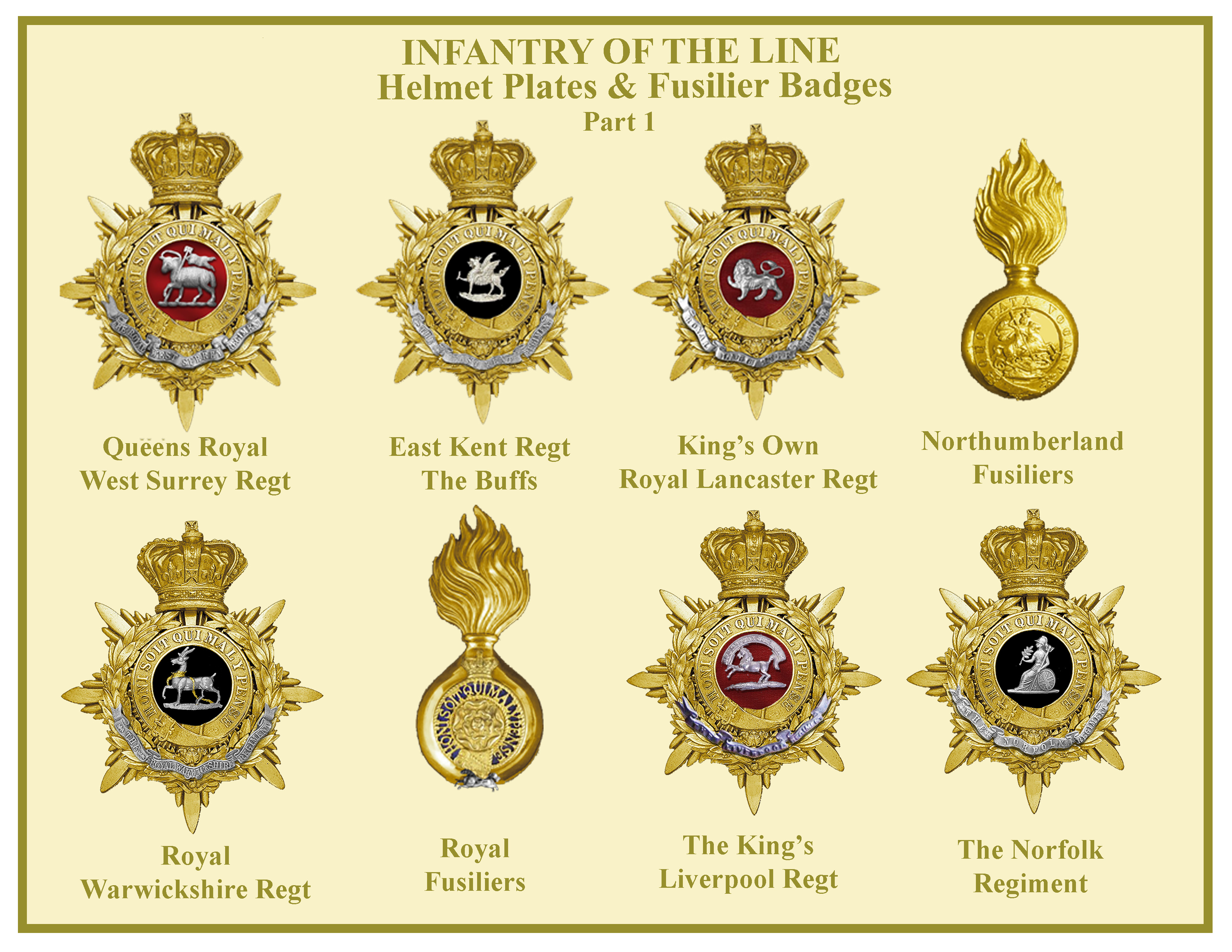
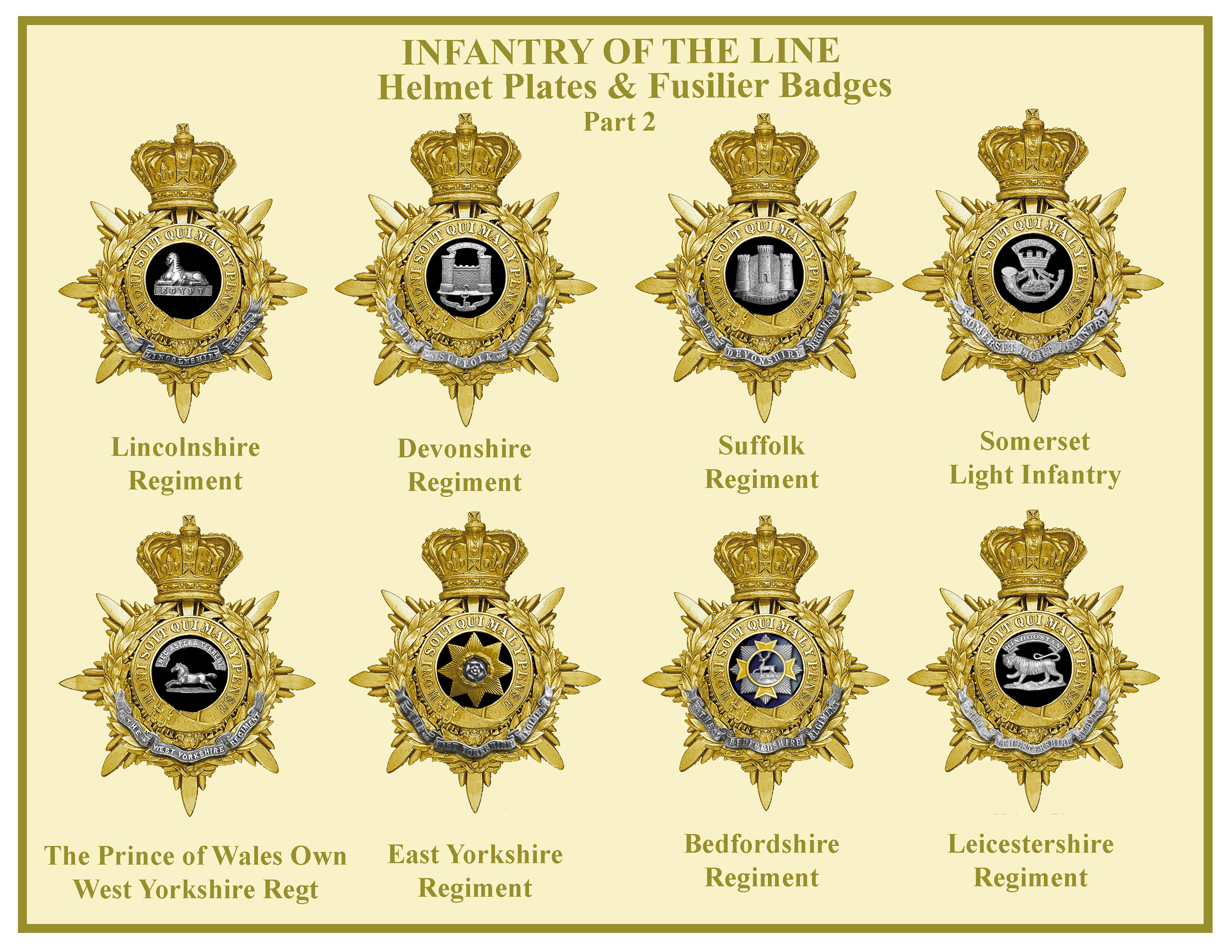
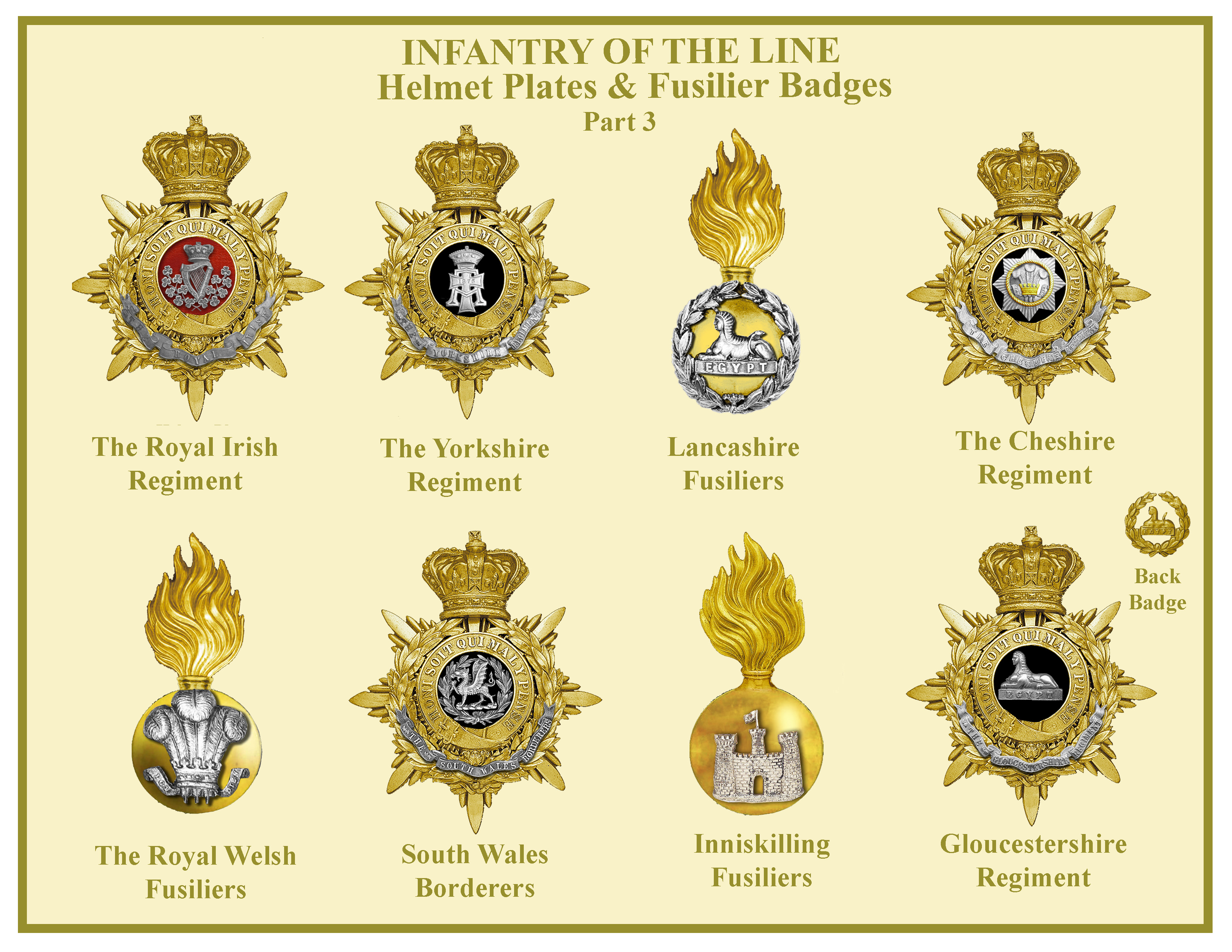
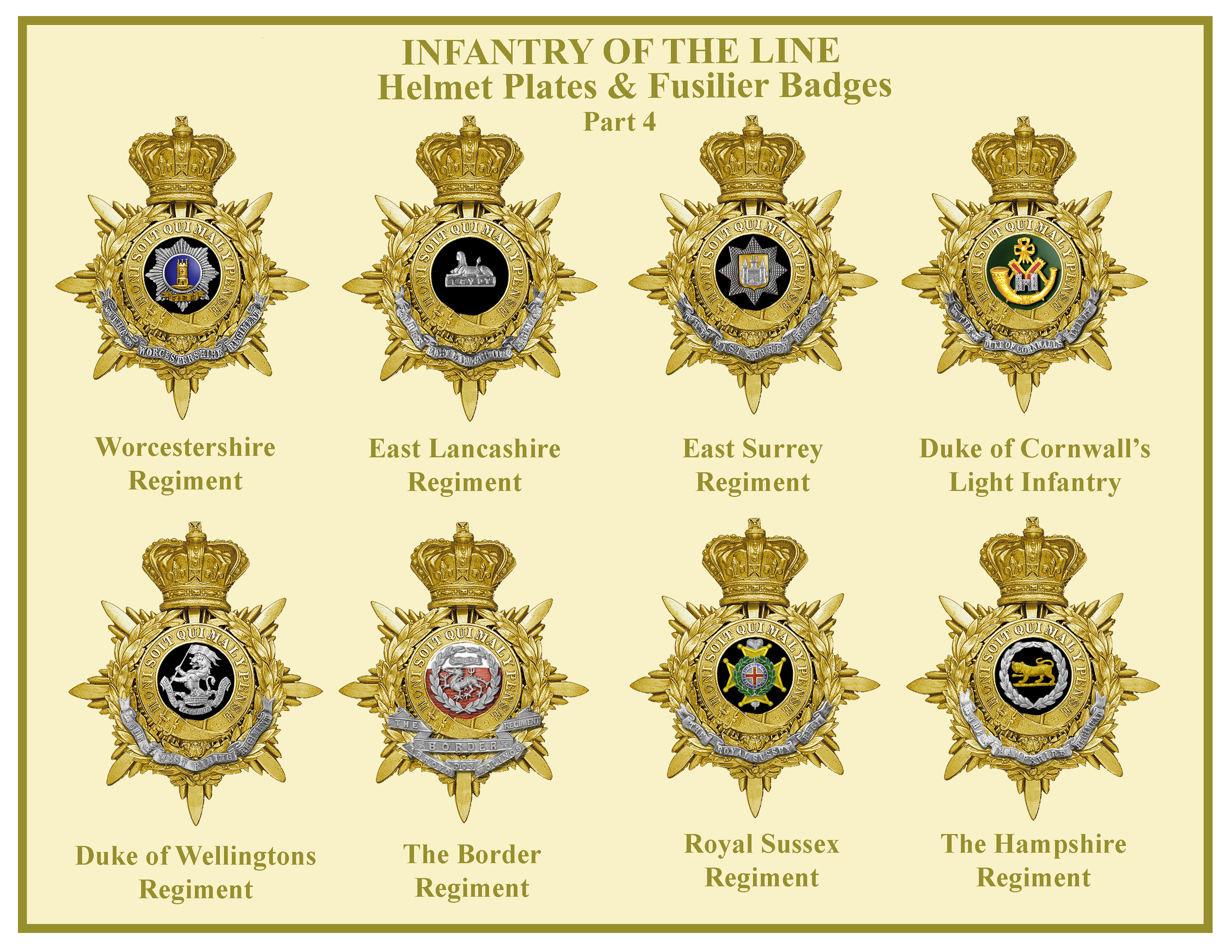
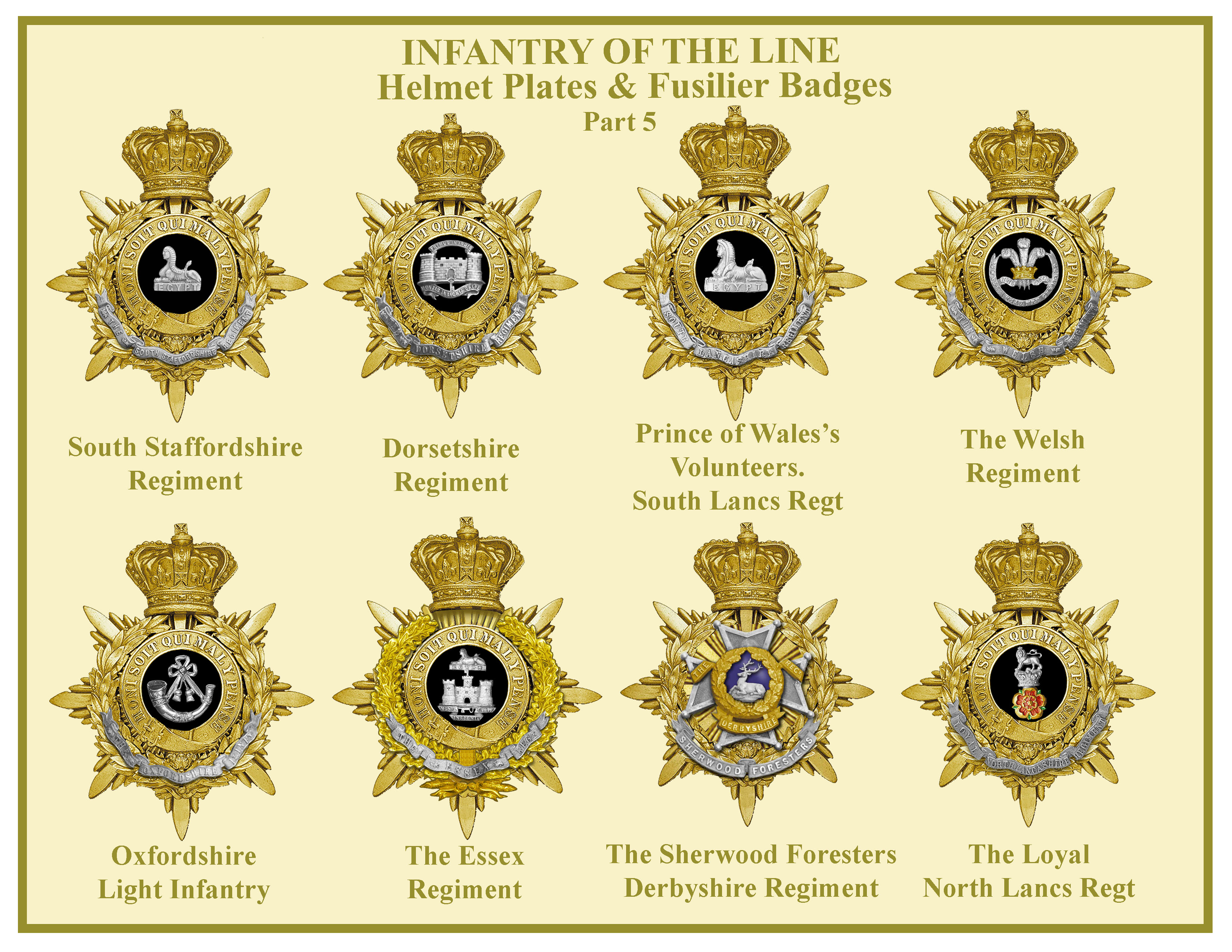
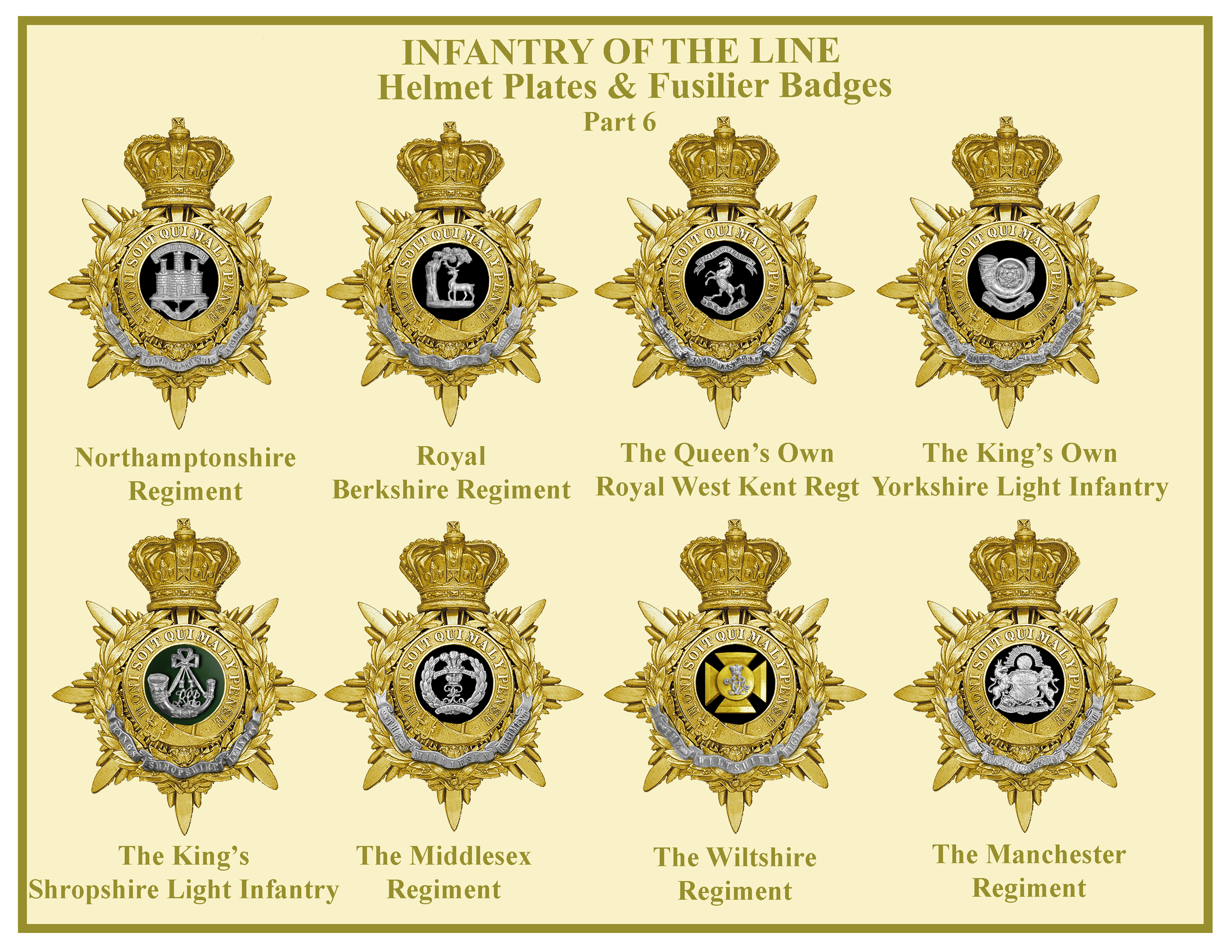
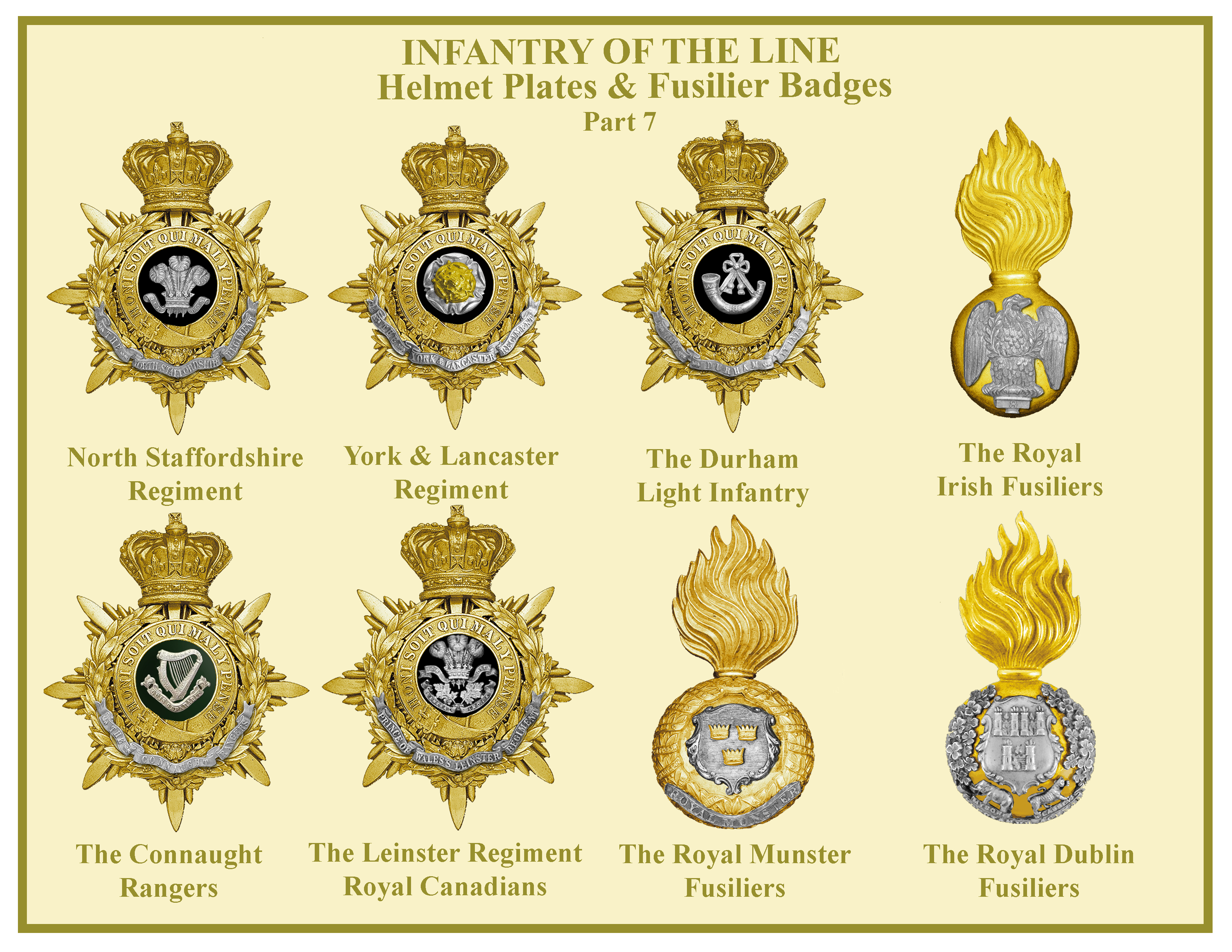
The above Helmet plates were worn until both the helmets and plates were abolished.
the details of the Helmet Plates in detail along with collar badges and waist clasps can be reviewed on the Insignia section of the website to do so:-