





Officer's Undress Uniforms
The forage cap introduced in 1855 was a shallow, kepi style round cap with a flat straight peak and black oakleaf pattern band. Royal regiments had scarlet bands, while Scottish regiments wore diced bands. On the front was the regimental number in gilt for officers and brass for warrant officers and staff.
THE 1880 FORAGE CAP FOR INFANTRY
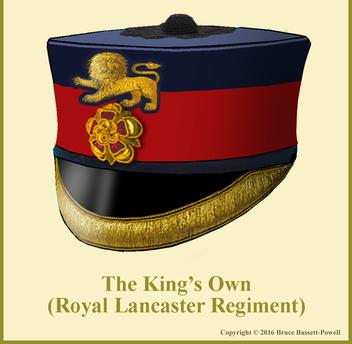
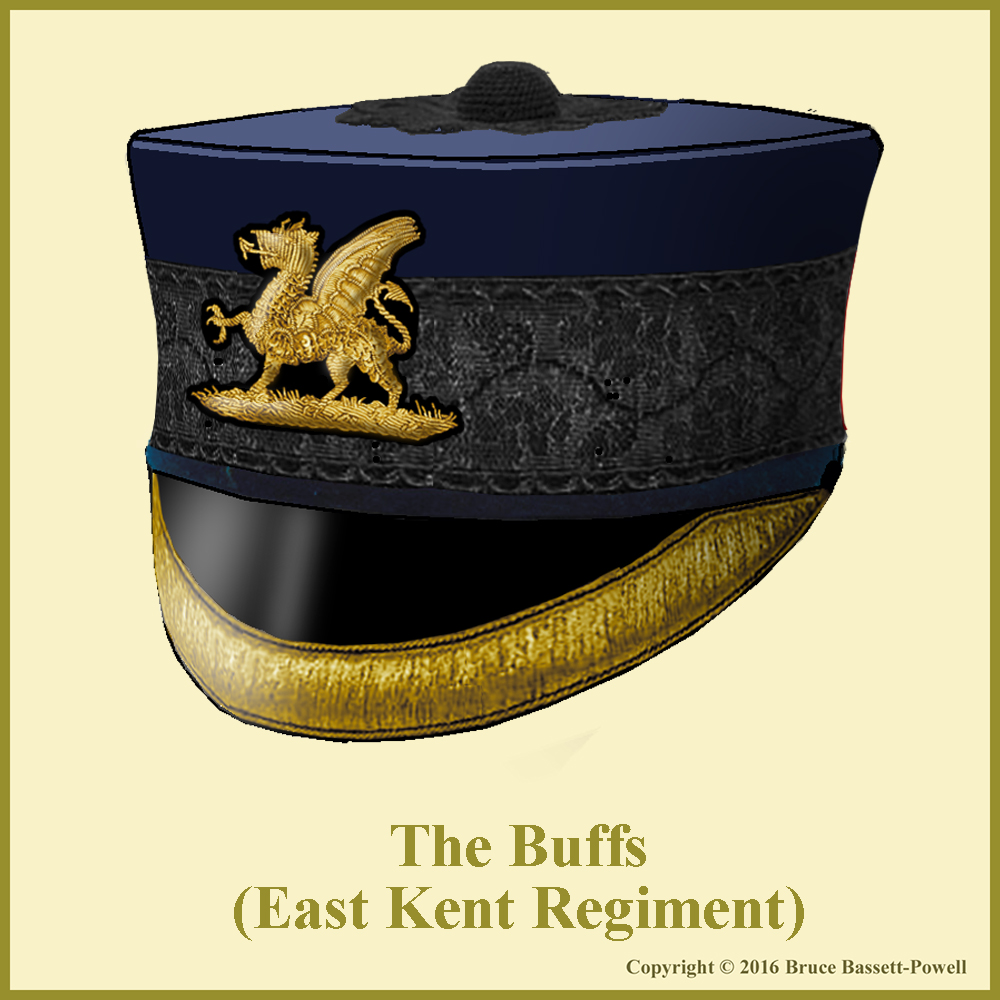
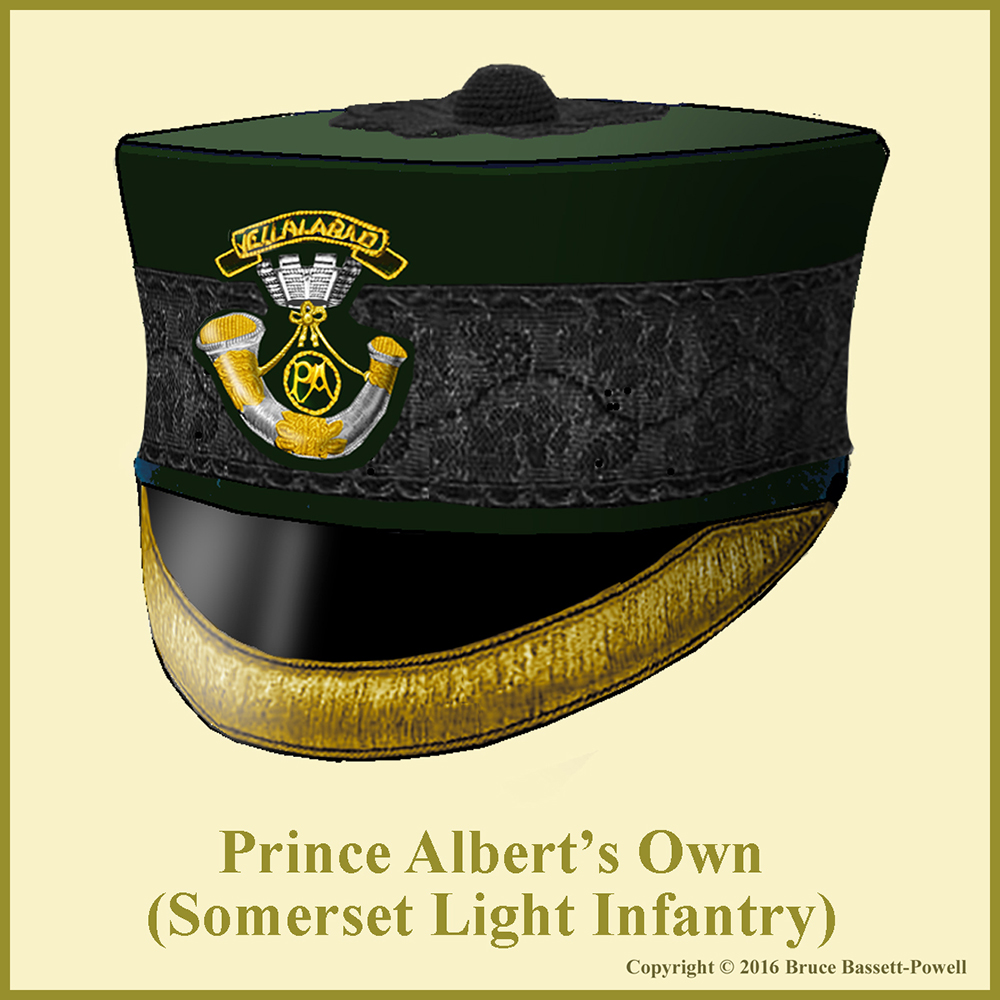
The cap was 3 inches high, of blue cloth for infantry and dark green for light infantry. The drooping patent leather peak was edged with a 1/2 inch full gold embroidery. There was a patent leather chinstrap attached inside the headband. Regiments styled ''Royal'' had a band of 1 1/2 inch scarlet cloth while non-Royal regiments and all light infantry regiments had a 1 3/4 inch black band of oak leaf lace. Scottish and Rifle regiments caps will be described in their section.The cap was finally discontinued in 1902
The Cap was worn by the following:
All the officers of the regiment including the Quartermaster. The Battalion HQ warrant officers and staff sergeants. This included the following appointments; The Sergeant Major, the Bandmaster, the Schoolmaster and the Quarter-Master Sergeant. Also the Musketry Sergeant Instructor, Gymnastics Sergeant Instructor, Band Sergeant, Sergeant Drummer (Later Drum Major), the Armourer Sergeant, Orderly Room Sergeant, Pioneer Sergeant, Signals Sergeant, Hospital Sergeant, Sergeant Master Cook, Sergeant Master Tailor, Sergeant Master Shoemaker.
For additional details of this cap
INFANTRY UNDRESS FROCKS & PATROL JACKET
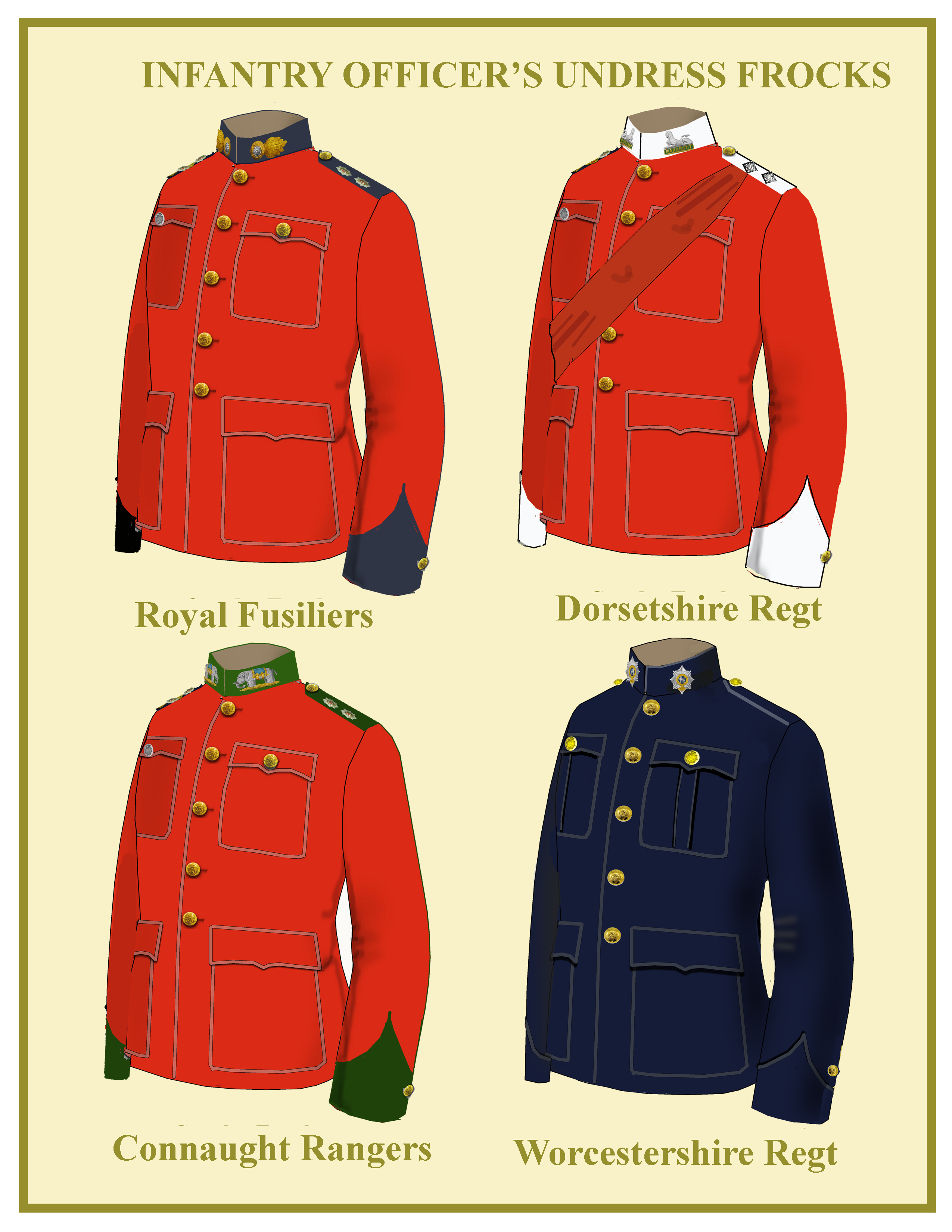
following the Crimean War, the number of campaigns fought in hot and uncomfortable terrains caused the War office to consider reviewing the clothing for officers. The first garment was the scarlet frock, which was authorised in 1861. It was made of serge, which was much lighter and durable than the full-dress tunics. In 1867, under a general order, the patrol jacket was introduced. It was described in the 1874 Dress Regulations as being of blue cloth edged with black mohair braid down the front and on the collar. There were four loops of black braid with drops at each side with more braid on the rear seams. There were black braid Austrian knots on the cuffs. This garment could be described as universal for many regiments and Corps.
Cavalry, Artillery, Engineers and Departments would adopt their own designs. (As seen in previous Victorian sections.)
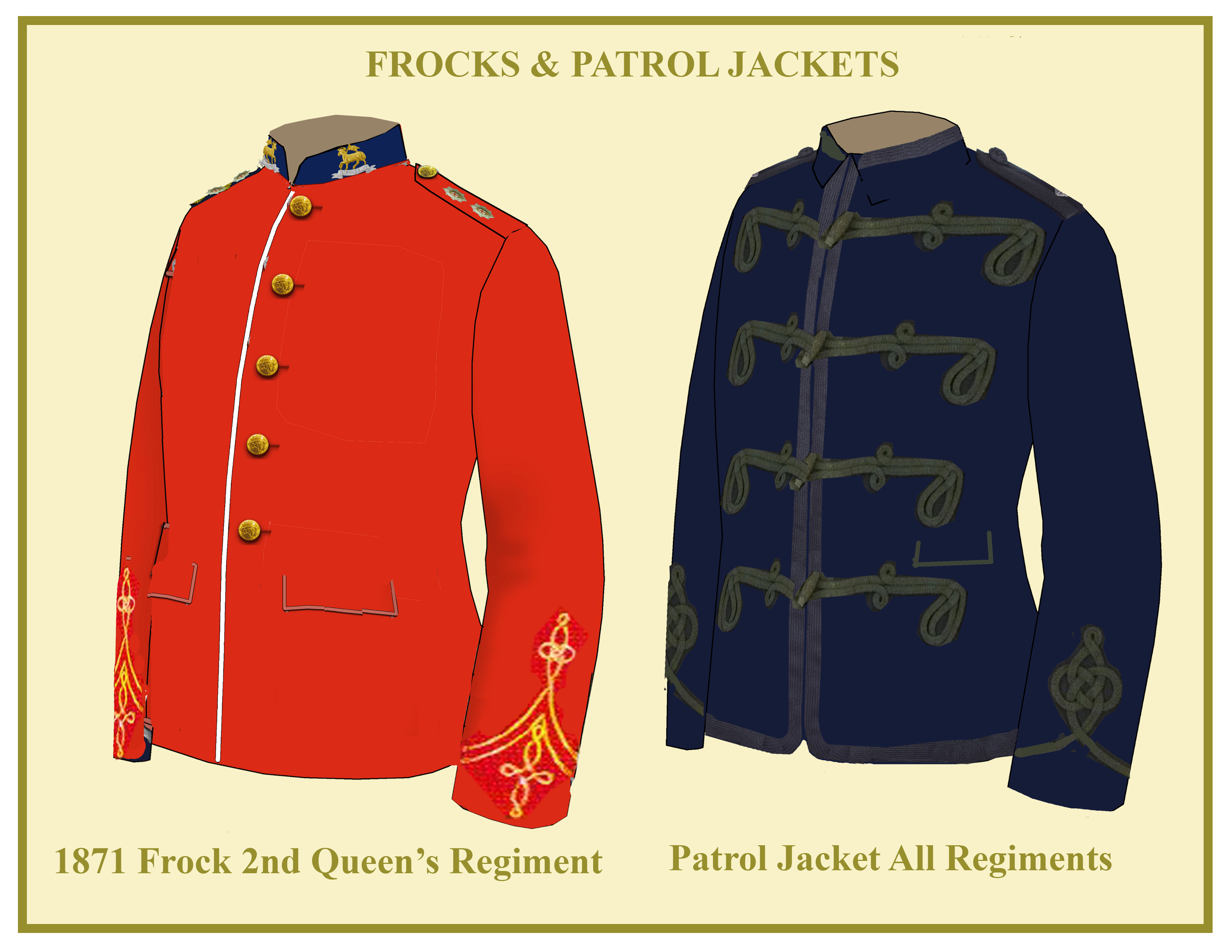
Frocks & Patrol Jackets
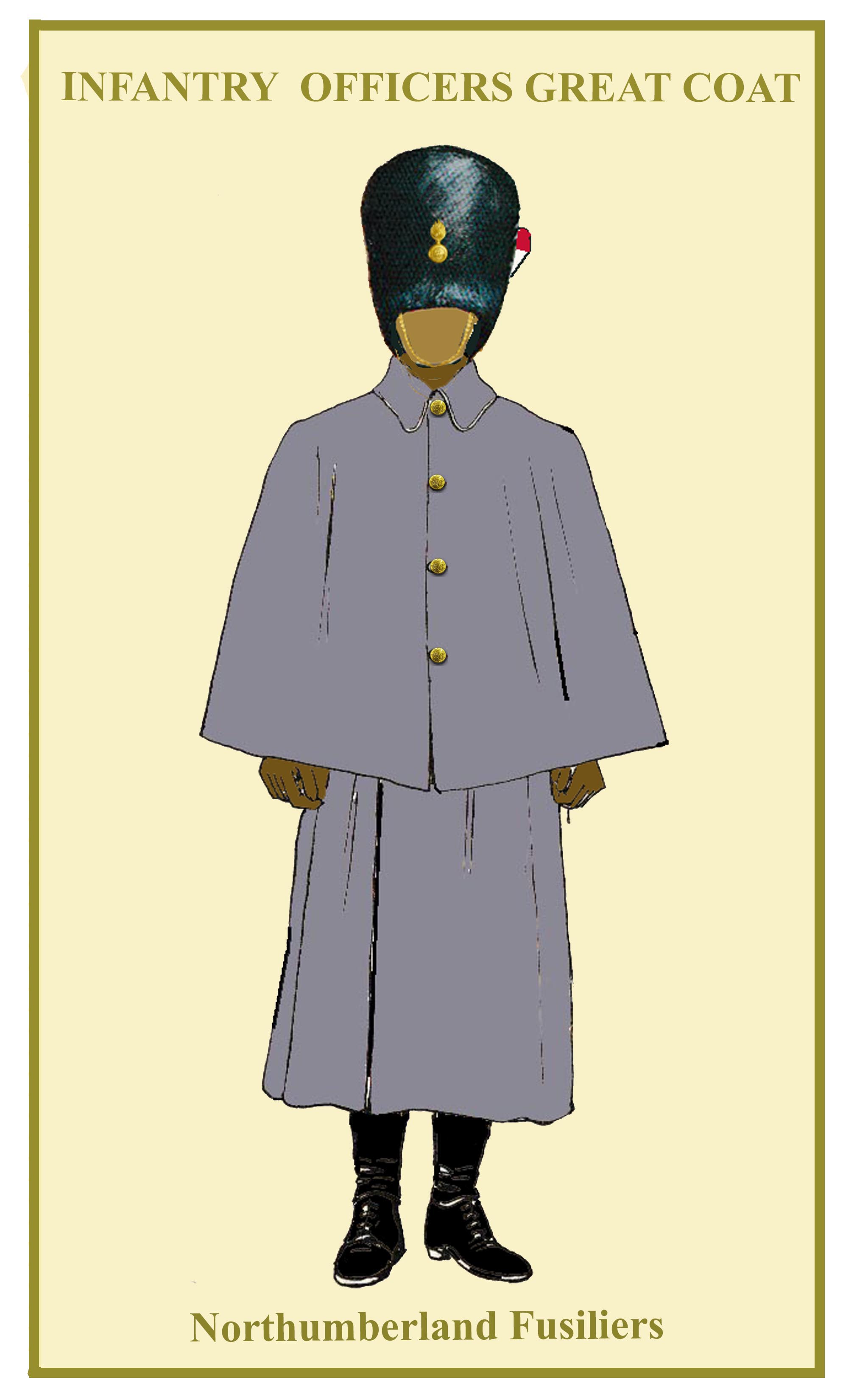
Officer's Greatcoat & Cape
MESS DRESS
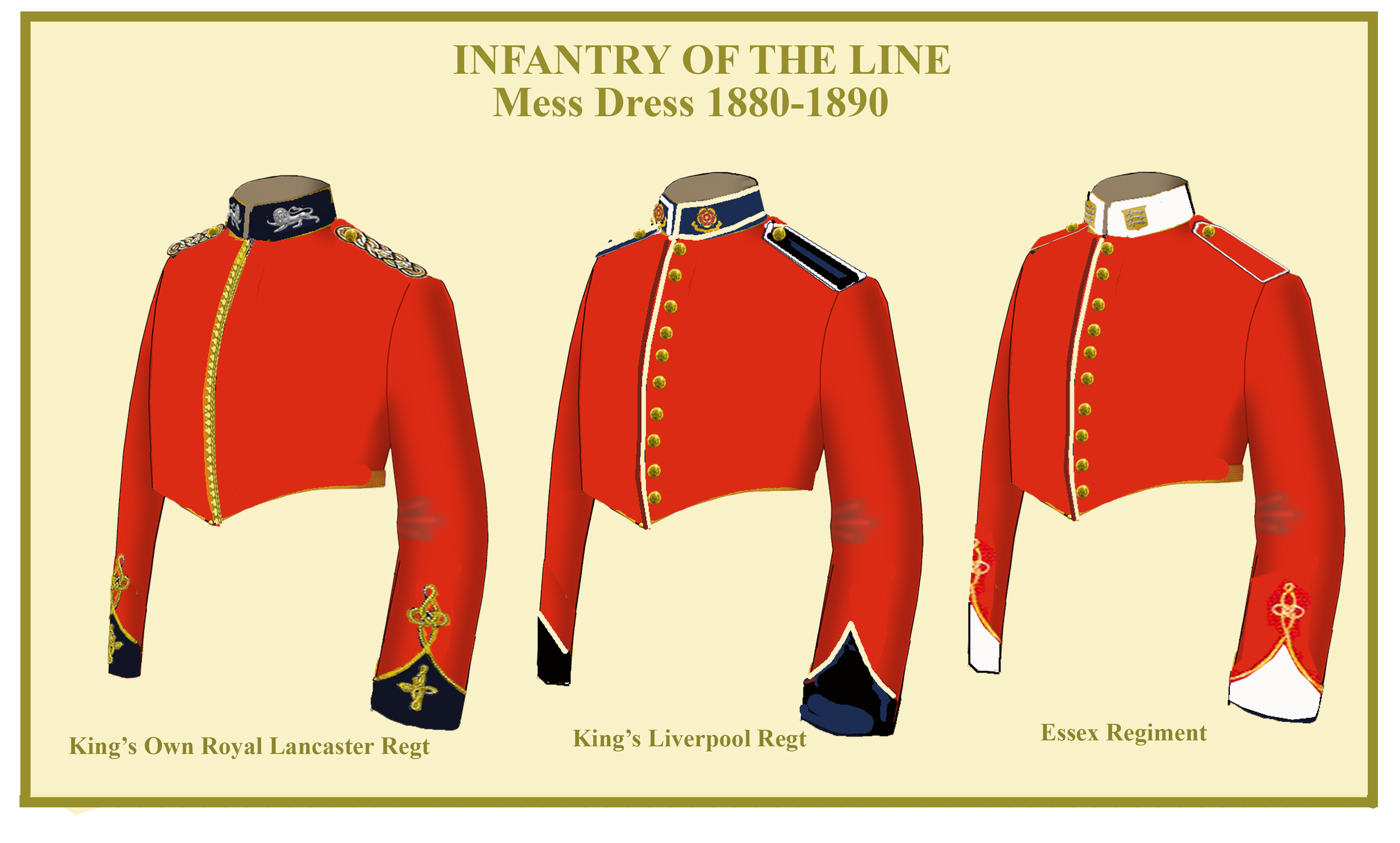
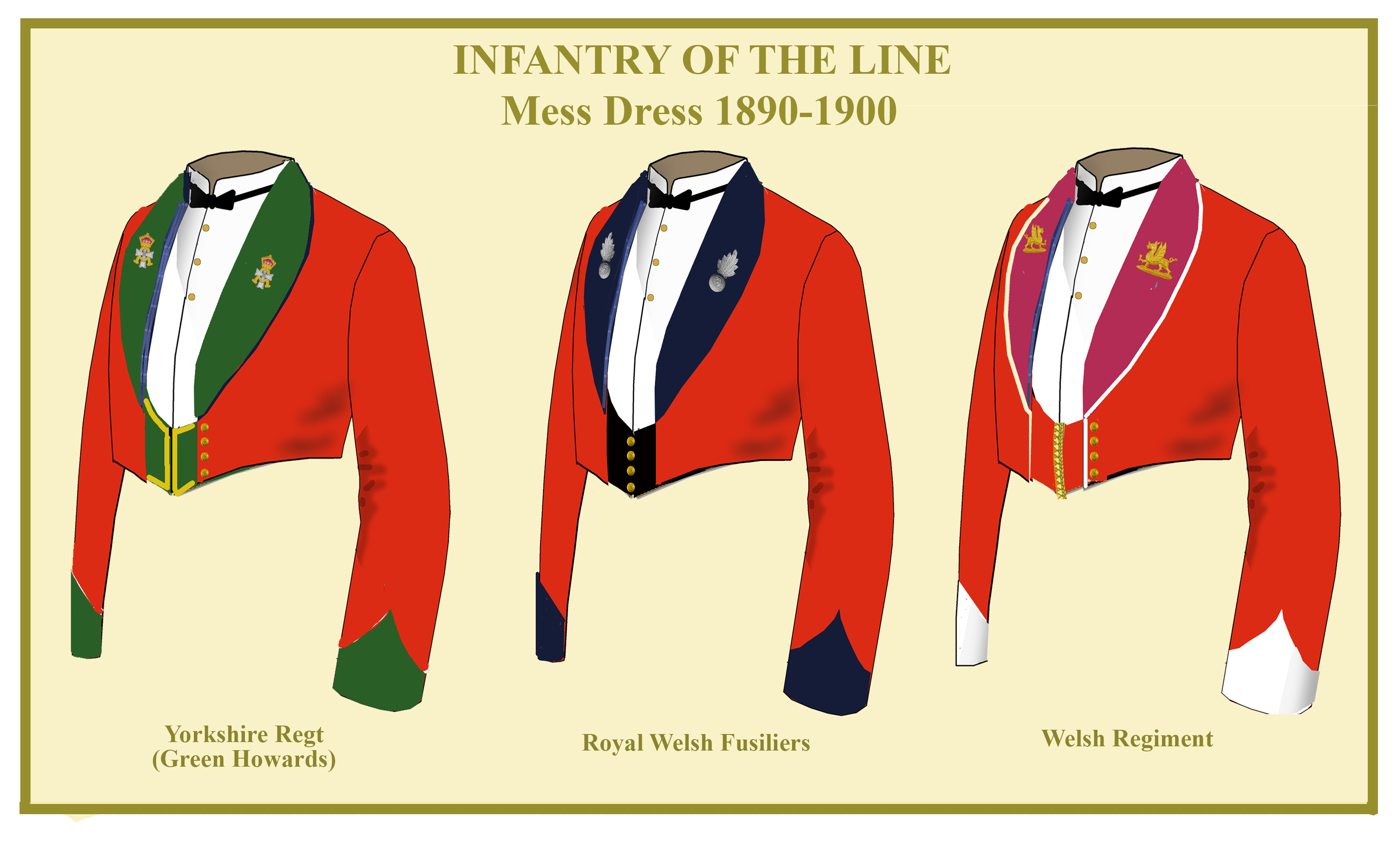
Mess dress was a item of officer's clothing that was much cherished. First introduced in the 1840s, it was adopted first by the cavalry and over the next thirty years by all branches of the army. In the Infantry, the design was derived from the shell jacket. The first regulations were authorised in 1872. In the infantry, the collar and pointed cuffs were of facing colour with gold laced edging. By 1890 the garment bore roll cloth lapels and established by the 1892 regulations. The lapels and cuffs were of of colours and designs of regimental custom. When outside, the round forage cap was worn.


Forage Caps
Infantry of the Line
