COLOURS OF THE FOOT GUARDS





UNIFORMS, ARMS & EQUIPMENT - FOOT GUARDS
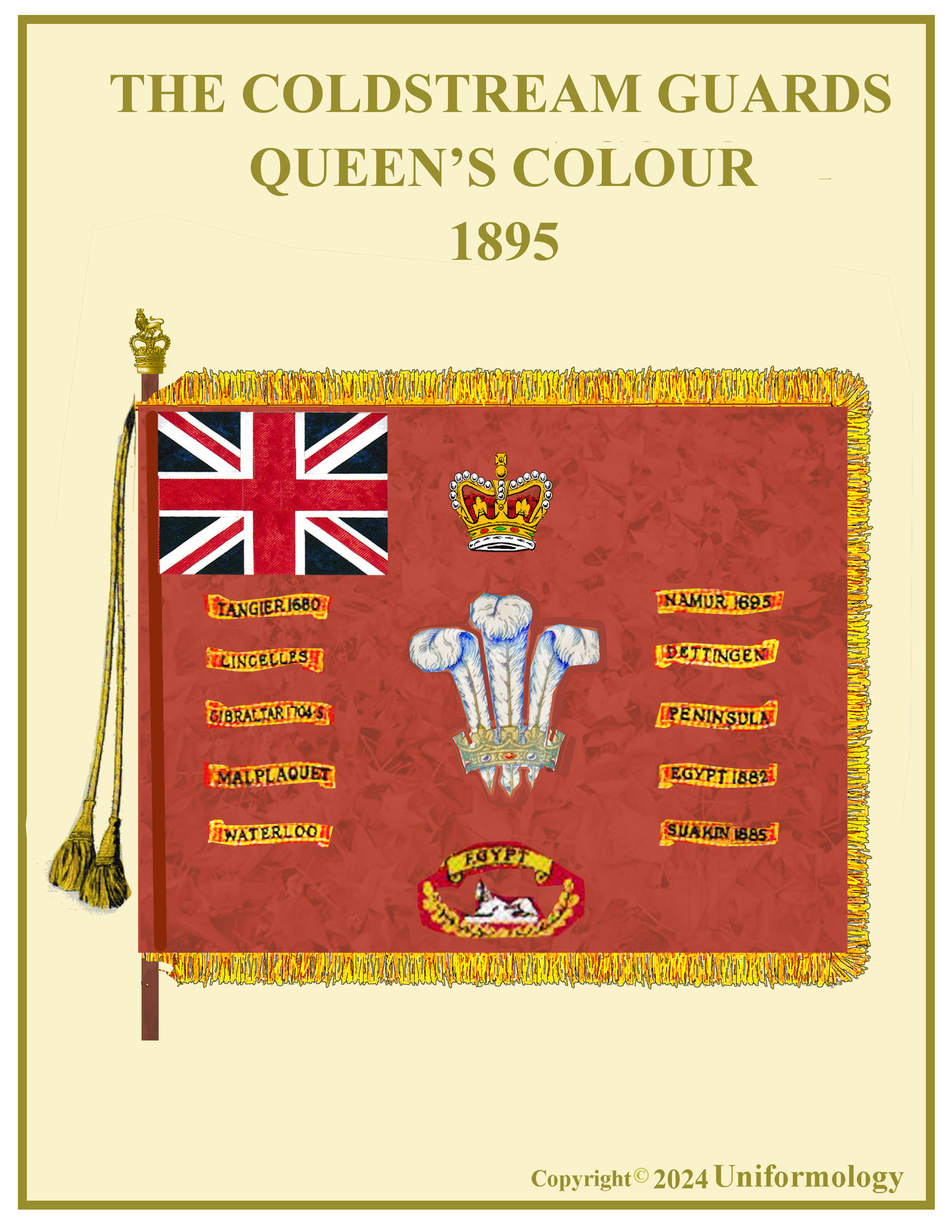
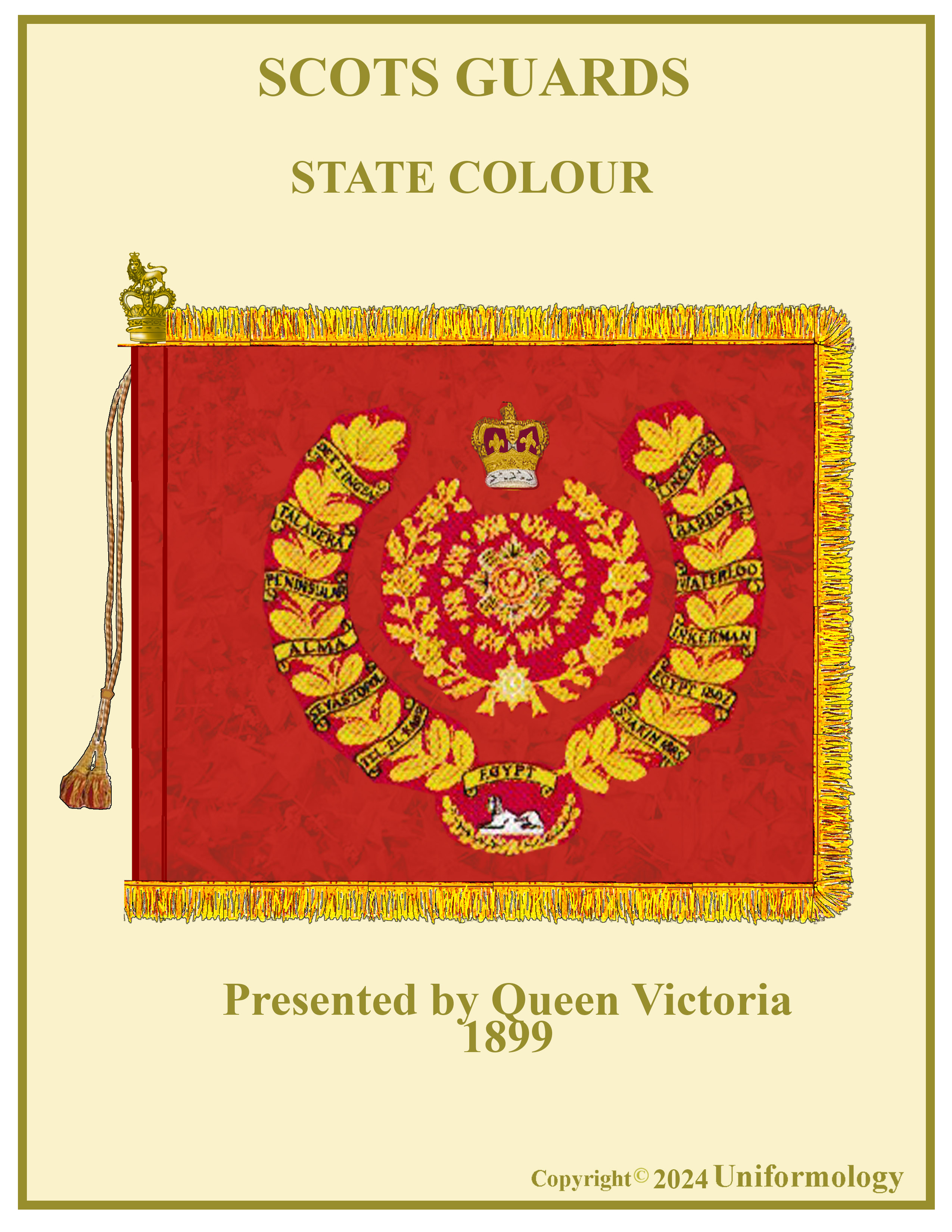
Soldiers have carried flags and banners into battle from time out of mind. They were used as rallying points and the recognised symbols that indicated which side they were on. By the time of the Thirty Years War, Gustavus Adolphus formed regiments of horse and foot which received flags that quickly let the soldiers know their designated units. In Britain, when infantry and cavalry regiments under the crown were formed after the Civil War, their flags were not subjected to regulation. The types of flags used by both sides in the civil war, informed the pattern of colours that would be used when regulations were instituted. Both Royalist and Parliamentary units used colored flags which used the red cross of St. George in the canton. The cross was also used in different configurations. Scottish regiments used the cross of St. Andrew on their flags.
From the 1660's the regimental flags remained much as they were in the Civil War. The main colour was the Colonel's which was in the facing colour of the regiment often with the St. Georges cross in the canton.
Regulations first came in 1747. The Guards colours were 72 inches on the staff and 78 inches long. These dimensions were also authourised for the line infantry. Like all infantry regiments, the Guards carried two colours. For all regiments the Kings or First Colour was to be the Great Union and the regimental or second colour was to be the colour of the facings. In the Foot Guards all three regiments has a crimson 2nd colour.
More regulations came in 1751 and 1768, mainly determining the size of Colours. The regulations of 1844, 1858, 1868 and 1873 continued this trend and by 1881 stood at 36 inches wide by 45 inches long including finial and fringe.
The battle of Laing's Nek in 1881 saw the last time colours were to be carried in battle. Discussions in Parliament had already addressed the issue after the disastrous battle of Isandlwanda in Zululand 1879
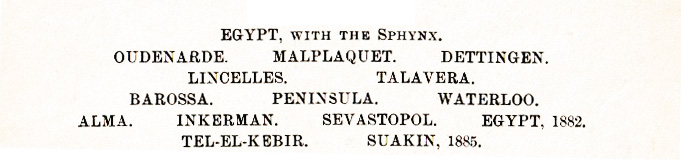
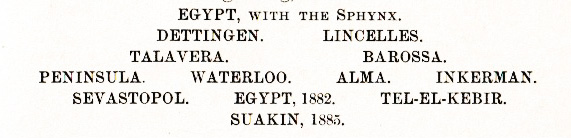
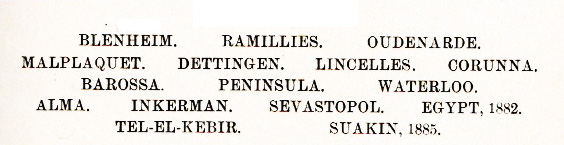
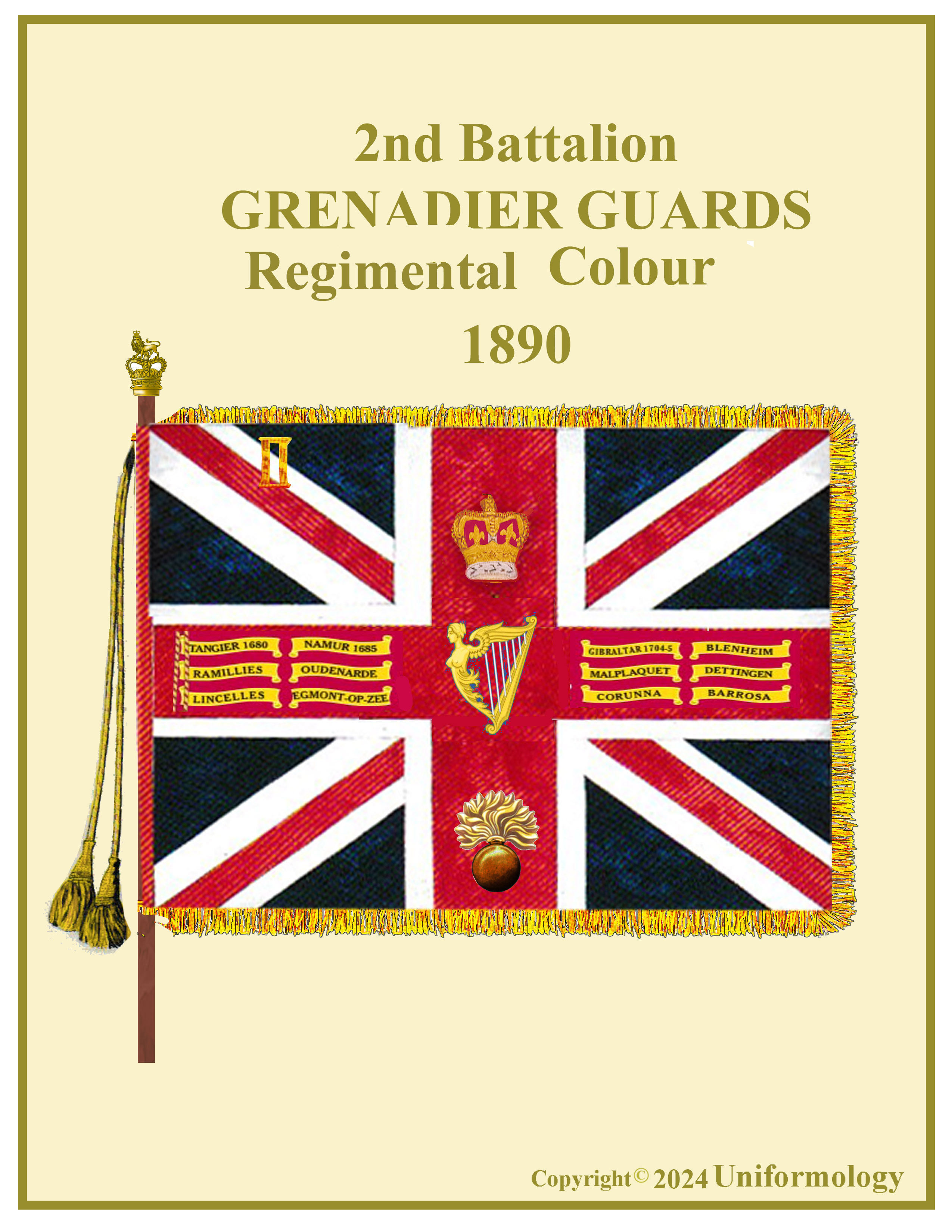
One major element that made colours more dear to soldiers hearts was the placing of battle honours on scrolls. The Foot Guards placed them in two or three columns on the Queens Colour and on the centre of the Regimental Colour.
There were several major differences of the Guards colours from the infantry that was unique.
When new colours were made, each Guards regiment rotated a special badge. These badges numbered in the teens or twenties and was placed on the centre of the the colour as shown below
Grenadier Guards
Coldstream Guards
Scots Guards
Unlike the infantry of the line, the Foot Guards Regimental colour is the full Union Jack while the Queen's Colour was crimson with the small union flag in the upper canton,