THE ART OF
CHARLES HAMILTON-SMITH
Charles Hamilton Smith was born in Flanders on the 26th December 1776. He spent his early years at school in Surrey. Returning home to attend the Austrian School of Artillery and Engineering. He then went back to England joining the 8th Light Dragoons, at the age of about 16. In March 1796 he sailed to the West Indies with the émigré Hompesch Hussars ranking as a cornet. He survived the decimation of that corps by yellow fever and in 1797 was commissioned as a lieutenant in the 60th Royal American Regiment, another unit largely composed of foreigners. He saw extensive service in the West Indies.
In 1806 he joined the 18th (Royal Irish) Regiment as a Captain later exchanging into the 6th (Warwickshire) Regiment. Returning to Britain in 1807, he married his wife Mary in 1808. They had five children.
On returning home Hamilton Smith became involved in various military activities including assistant Quartermaster General (seeing action on the Walcheren Expedition. In 1814 he Joined the 15th (East Riding) Regiment ending his career as a Major. After a brief visit to the United States, he went to Canada where he prepared a plan for the defence of that Dominion, having concerned himself with intelligence activities on North American security. This assessment was later published by the British Government.
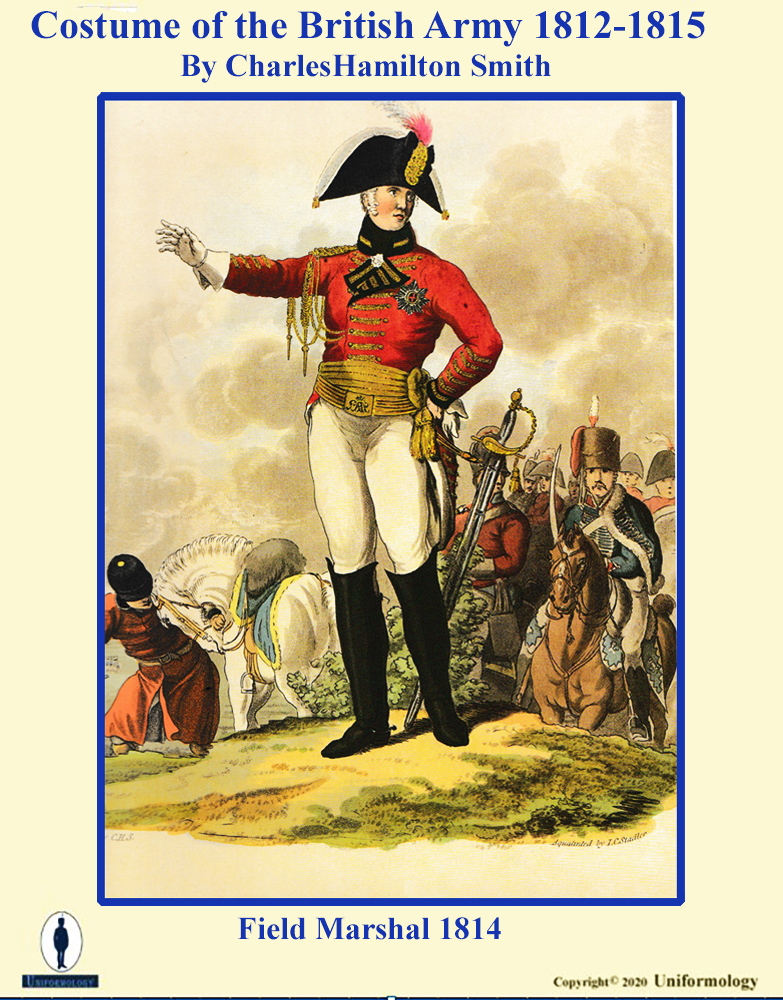
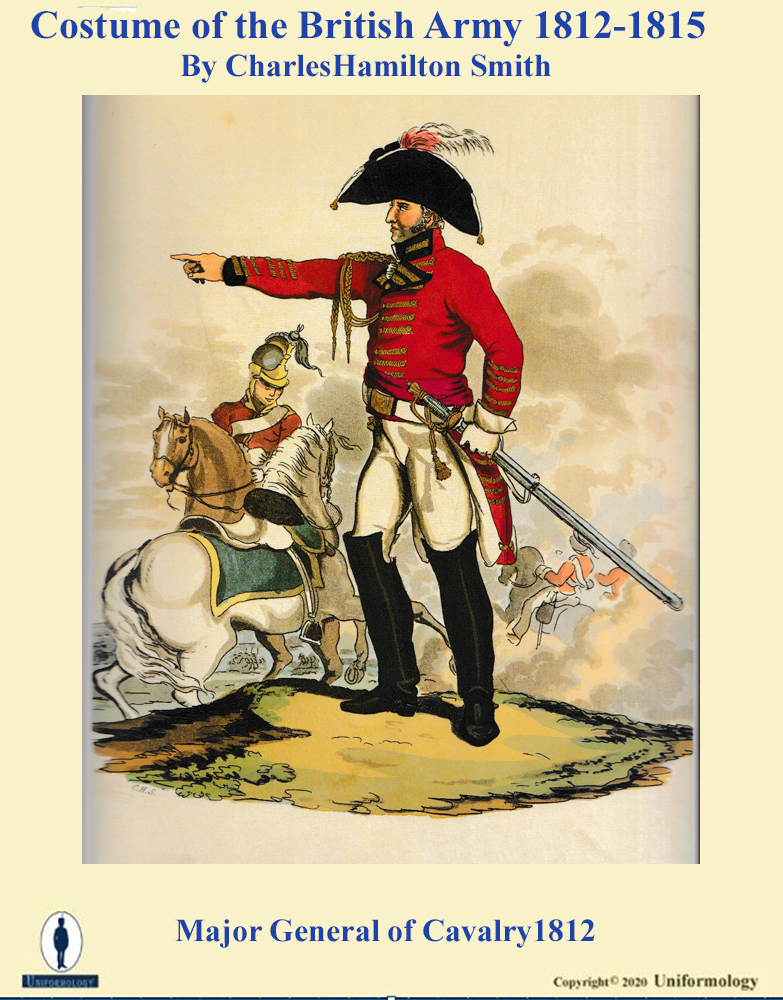
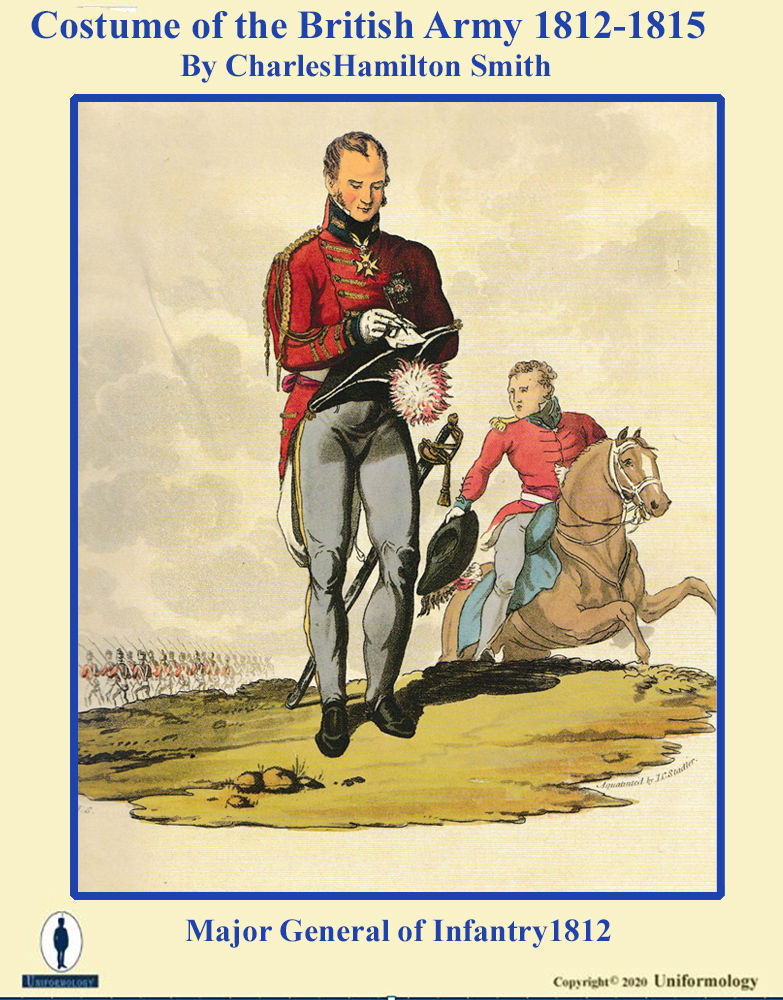
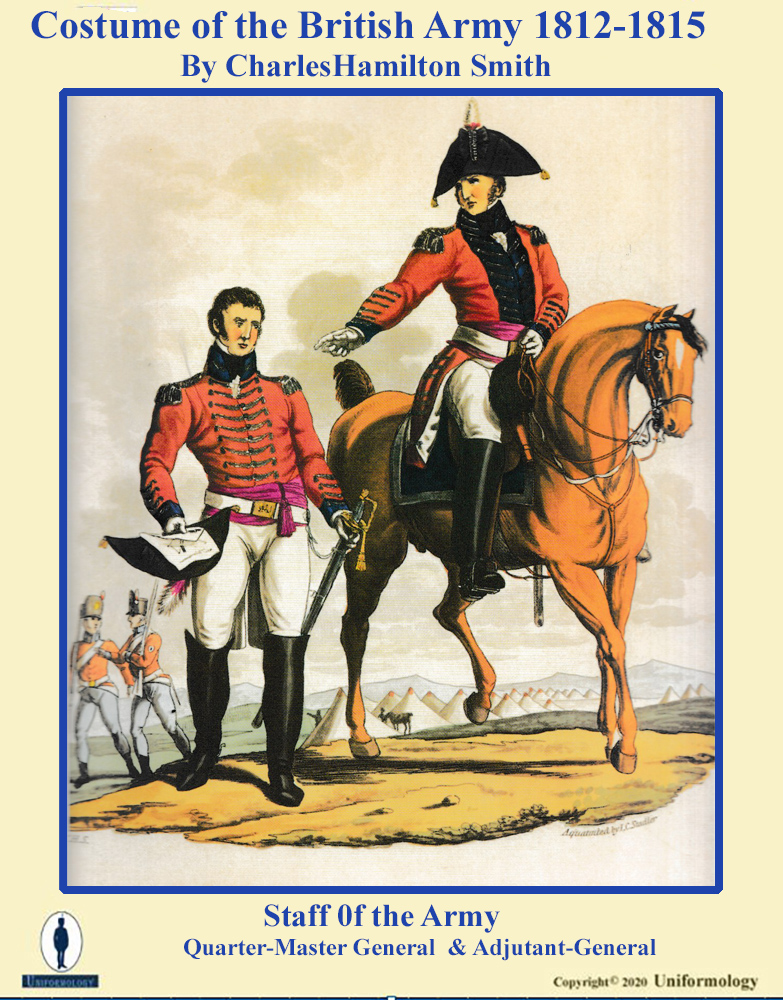
Although he was promoted to Lieutenant Colonel, he never saw active service again. From this time he absorbed himself in activities that involved science and nature. Most of all he was an artist. He made thousands of drawings, estimated at one time as 38,000. Subjects included animals, architecture and heraldry. He was mostly interested in military uniforms. Hamilton Smith's main achievement was his “Costume of the British Army” which is shown in this series. He died in 1859.
PART ONE
Generals & Staff

NEXT -PART TWO
CLICK BELOW